

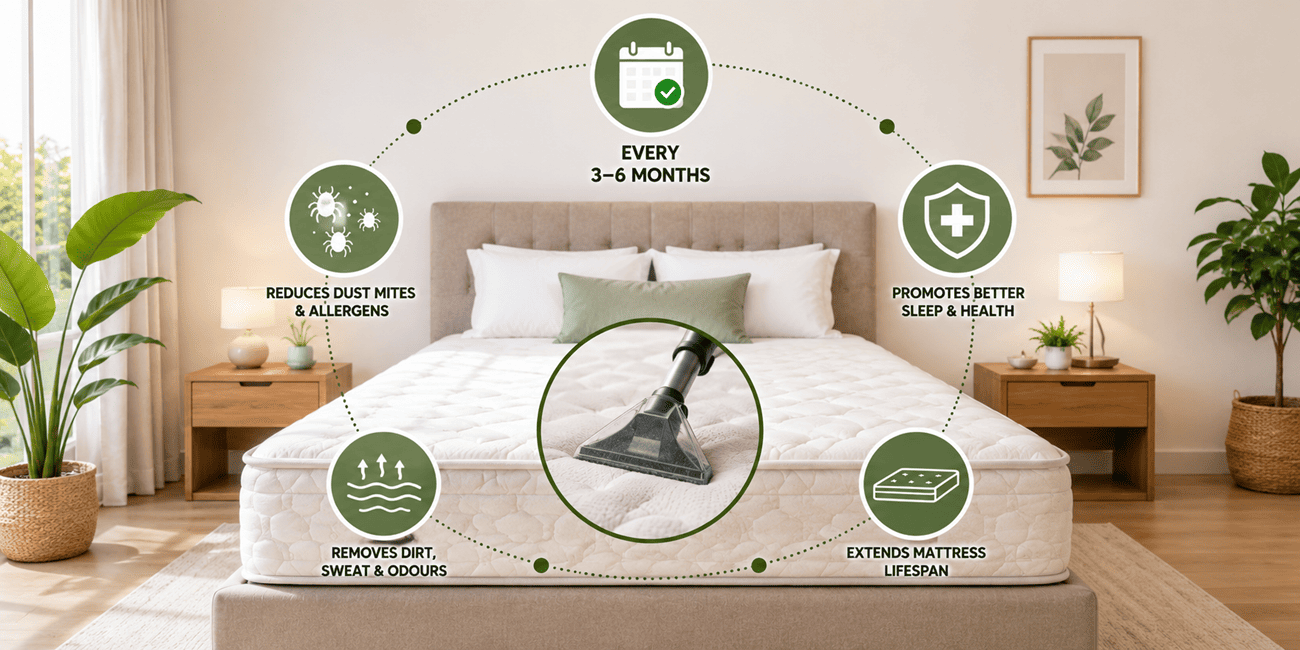
A mattress surface might appear spotless but it contains hidden layers of dust together with sweat residues, dead skin particles and allergenic substances. The hot and damp climate of Singapore makes this issue spread rapidly through the environment. The combination of moisture in the atmosphere enables dust mites to thrive while also promoting the growth of mold and bacteria.
People tend to wash their bed sheets every week but they fail to clean their mattresses. The process will lead to a decline in bedroom sleep quality while it produces both allergic reactions and unpleasant bedroom smells. Most residential properties need mattress maintenance beyond what their owners assume, especially when they consider mattress cleaning frequency in Singapore.
This guide explains how humidity affects mattresses, the health problems caused by poor mattress care, and the best time to clean mattresses in Singapore homes.
Why Singapore’s Humid Climate Affects Your Mattress
Singapore has high humidity levels throughout the year. Moist air settles into soft surfaces like sofas, carpets, curtains, and mattresses.
A mattress absorbs:
- Sweat
- Body oils
- Dead skin
- Moisture from the air
When moisture stays trapped inside the mattress, it creates a space where dust mites and mould can grow.
Unlike bedsheets, mattresses are thick and dense. Air does not move through them well. This means trapped moisture can stay inside for long periods.
The problem becomes worse if:
- You sleep with the air-conditioning off
- Your room has poor ventilation
- You sweat during sleep
- You eat or drink in bed
- Pets sleep on the mattress
Without proper care, the mattress can become unhygienic within months.
Also Read: 20 Cleaning Hacks Every Singapore Homeowner Should Know
Why Are Dust Mites a Common Problem in Singapore Homes?
Dust mites are tiny pests that feed on dead skin cells. They thrive in warm and humid places, which makes Singapore homes ideal for them.
Mattresses are one of their favourite places to live.
Dust mites are too small to see, but their waste can trigger:
- Sneezing
- Skin irritation
- Runny nose
- Itchy eyes
- Asthma symptoms
This is why many families focus on dust mite removal SG services and regular mattress care.
Children, older adults, and people with allergies often react more strongly to dust mites. Even if the mattress looks clean, allergens may still be trapped deep inside.
What Are the Signs That Your Mattress Needs Cleaning?
Many people wait until they see stains before cleaning a mattress. In reality, several warning signs appear much earlier.
Look out for:
- Musty smells
- Increased sneezing at night
- Itchy skin after sleep
- Visible stains
- Damp feeling on the mattress
- Dust build-up around the bed
- Poor sleep quality
If these problems appear, your mattress may already hold dust mites or trapped moisture.
What Is the Ideal Mattress Cleaning Frequency in Singapore?
The ideal mattress cleaning frequency in Singapore depends on daily use and household conditions. Here is a simple guide for most homes.
Weekly Mattress Care
Basic care each week helps reduce dirt and moisture build-up.
You should:
- Change bedsheets once a week
- Vacuum the mattress surface
- Open windows for airflow
- Let the mattress air out for a few hours
This step helps reduce dust and sweat before they settle deep inside the mattress.
Monthly Mattress Cleaning
Once a month, do a deeper clean.
This includes:
- Vacuuming all sides of the mattress
- Cleaning light stains
- Rotating the mattress
- Checking for mould or damp spots
Monthly care supports better mattress hygiene, which Singapore households need in humid weather.
Also Read: Seasonal Home Cleaning Schedule for Singapore Homes (Yearly Maintenance Plan)
Deep Cleaning Every Six Months
Most mattresses need deep cleaning every six months.
This process helps remove:
- Dust mites
- Sweat residue
- Deep stains
- Allergens
- Trapped dirt
Homes with pets, children, or allergy sufferers may need more frequent cleaning.
For some households, cleaning every three to four months works better.
How Humidity Increases Allergy Risks
Humidity does more than create discomfort. It also increases allergy risks inside the home.
Moisture allows:
- Dust mites multiply
- Mould spores to spread
- Bacteria grow faster
People often blame outdoor pollution for allergies, but indoor air quality also matters.
A dirty mattress can affect breathing during sleep. Since people spend many hours in bed each night, exposure becomes constant.
Poor mattress hygiene, Singapore residents ignore, can lead to:
- Night-time coughing
- Sinus irritation
- Eczema flare-ups
- Blocked nose
- Disturbed sleep
Children may face stronger reactions because their immune systems are still developing.
How to Keep Your Mattress Clean Longer
Regular care helps reduce dirt and moisture build-up.
Use a Mattress Protector
A mattress protector creates a barrier against sweat, spills, and dust.
Choose one that is:
- Breathable
- Washable
- Waterproof
Wash the protector every one to two weeks.
Improve Airflow in the Bedroom
Air circulation helps reduce moisture levels.
You can:
- Open windows during dry weather
- Use fans for ventilation
- Avoid placing the mattress directly against damp walls
Good airflow slows down mould growth.
Avoid Sleeping on a Damp Mattress
Some people clean stains and use the mattress before it dries fully.
This traps moisture inside and creates a breeding ground for mould.
Always let the mattress dry fully before use.
Vacuum Regularly
Vacuuming removes:
- Dust
- Skin flakes
- Surface allergens
Use slow movements across the mattress surface for better results.
This simple step helps support dust mite removal SG efforts at home.
Can Sunlight Help Keep Your Mattress Fresh?
Sunlight helps reduce moisture and odours.
If possible:
- Place pillows and bedding under sunlight
- Air out the mattress near a bright window
Still, sunlight alone will not remove deep dust mites or bacteria inside the mattress.
It should support regular cleaning rather than replace it.
How Often Should Allergy Sufferers Clean Their Mattress?
Allergy patients must follow a particular cleaning timetable, which requires them to perform cleaning tasks at specific times.
For allergy-prone households:
- Vacuum weekly
- Wash bedding in hot water
- People need to perform deep mattress cleaning operations every three to four months.
The practice reduces allergen accumulation while helping people achieve improved sleep quality.
The dust mite removal solution focuses all its treatment efforts on allergy management because these insects remain the primary cause of indoor allergies which occur in warm and humid environments.
Why Should Mattress Cleaning Be Part of Spring Cleaning?
Many households include mattress care during spring cleaning. This is a good habit because mattresses collect dirt slowly over time.
During spring cleaning, you can:
- Rotate the mattress
- Vacuum deeply
- Wash bedding and protectors
- Inspect for mould
- Remove hidden dust
Still, mattress care should not happen only once a year.
Singapore’s climate requires more frequent cleaning to maintain proper mattress hygiene in Singapore homes.
What Mattress Cleaning Mistakes Should You Avoid?
Some cleaning habits can damage the mattress or make hygiene problems worse.
Using Too Much Water
A soaked mattress takes a long time to dry.
Excess moisture increases mould risk.
Ignoring Small Stains
Small stains can spread deeper into the mattress if left untreated.
Clean spills as soon as possible.
Forgetting to Rotate the Mattress
Rotating the mattress helps reduce uneven wear and moisture build-up.
Skipping Regular Vacuuming
Dust builds up quickly in humid conditions.
Weekly vacuuming keeps allergens under control.
How Long Does a Mattress Stay Hygienic?
Even with regular care, mattresses do not last forever.
Most mattresses should be replaced every seven to ten years.
Older mattresses often collect:
- More dust
- More allergens
- More moisture
They may also lose support, which affects sleep posture.
If your mattress still smells bad after cleaning or causes allergy symptoms often, replacement may be necessary.
What Is a Simple Mattress Cleaning Schedule for Singapore Homes?
Here is an easy cleaning routine to follow:
| Task | Frequency |
| Change bedsheets | Once a week |
| Vacuum mattress | Once a week |
| Rotate mattress | Once a month |
| Deep mattress cleaning | Every 6 months |
| Deep cleaning for allergy sufferers | Every 3–4 months |
| Replace mattress | Every 7–10 years |
Following this routine improves mattress cleaning frequency in Singapore homes affected by humidity.
Final Thoughts
Overall, the humid conditions of Singapore produce perfect circumstances for dust mites to flourish while mold develops and water stays stuck in the environment. People who fail to maintain their mattresses will develop allergy-causing elements which lead to poor sleep quality. Regular cleaning protects both your mattress and your health.
The combination of vacuuming with mattress ventilation and deep cleaning sessions will create major improvements through a basic cleaning schedule. Singapore families need to maintain proper mattress hygiene because their requirements extend past basic cleaning needs.
The system operates to improve sleep quality through its ability to clean indoor air while reducing allergy symptoms. People who perform mattress care during their spring cleaning should create a schedule for mattress cleaning at different times throughout the year. ‘
The practice of mattress cleaning every day helps you keep your bed area clean while protecting Singapore’s hot and humid climate.
FAQs
How often should I clean my mattress in Singapore?
Most homes in Singapore should clean the mattress every six months. If you have pets, children, or allergy problems, you should clean it every three to four months to keep it fresh and healthy.
Can humidity damage a mattress?
The humid climate of Singapore creates conditions that allow mattresses to store moisture that becomes trapped inside them. People who do not clean their mattresses regularly will experience mold development from moisture which produces foul odors.
What is the best way to reduce dust mites in a mattress?
Vacuum the mattress often, wash bedsheets every week, and keep the mattress dry. The public maintains dust mite removal SG practices through these actions because they reduce allergen exposure while preserving home cleanliness.
Why is mattress hygiene important in Singapore?
Good mattress hygiene in Singapore homes helps clear away allergens, bacteria, and trapped moisture. The cleanliness of a mattress creates better sleep quality while it maintains fresh air conditions within the home environment.
Can I include mattress cleaning during spring cleaning?
Yes. You should include mattress cleaning as part of your spring cleaning activities. Deep cleaning removes concealed dirt while it eliminates marks and breaks down accumulated allergens which build up through time.


